
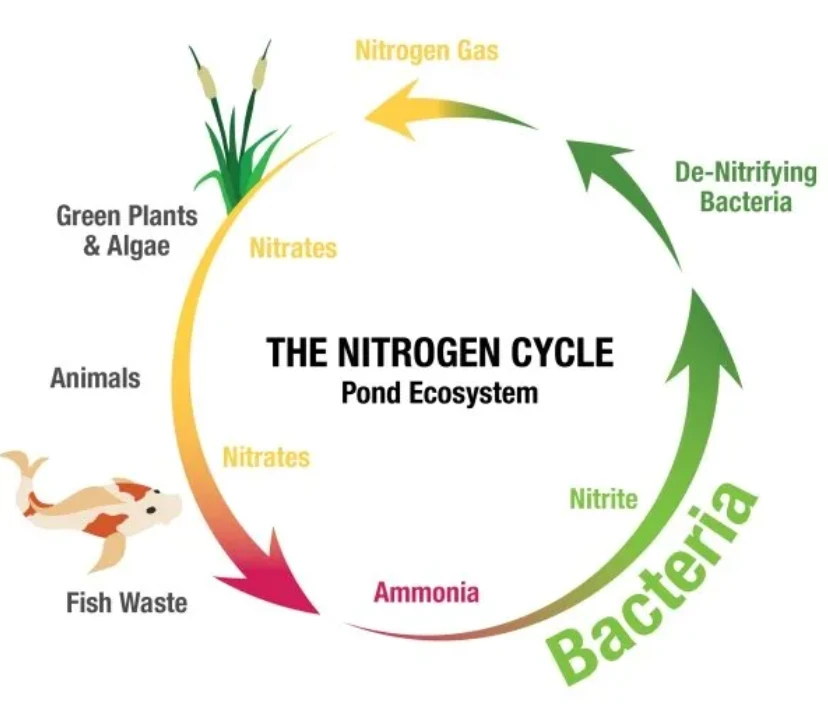
A clear pond is a beautiful thing, but it doesn’t happen by accident. While many pond owners focus on filters, pumps, and algae treatments, the true foundation of a healthy pond can’t be seen, it’s the biology of the water itself. Understanding the nitrogen cycle in your pond is one of the most important steps in maintaining water quality, healthy fish, and a balanced ecosystem.
When ponds struggle with cloudy water, algae blooms, or stressed fish, the issue is more than likely biological rather than mechanical. A pond that supports beneficial bacteria and natural filtration processes is far more resilient, easier to maintain, and enjoyable year after year. By learning how the nitrogen cycle in ponds works, you gain important knowledge into why some ponds thrive while others constantly fight water quality problems.
Why Water Clarity Starts with Biology
Many pond owners assume clear water is achieved through frequent cleanings and chemical treatments. While these things may offer short term results, they will not address the real issue and are usually not healthy for the ecosystem.
True water quality depends on biological balance. Biology determines how waste is processed, how nutrients are managed, and how well a pond can clean itself. Without a healthy biological system in place, debris and waste will accumulate faster than the pond’s filtration system can remove them. In understanding the nitrogen cycle cycle, you can shift your focus from constant intervention with short term solutions to long term water health and clarity.
What Is the Nitrogen Cycle?
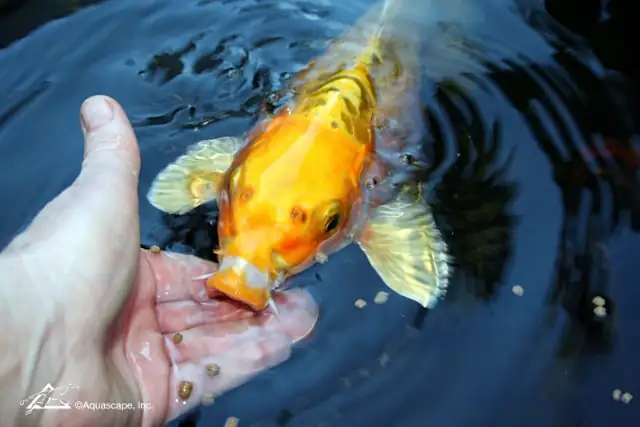
At its core the nitrogen cycle is nature’s way of recycling waste. Fish, plants, and organic debris all contribute waste to the pond. If left unmanaged, this waste becomes toxic. The nitrogen cycle uses beneficial bacteria to convert harmful waste into compounds that your pond’s ecosystem can use.
In simple terms, beneficial bacteria act as your pond’s cleanup crew. They live on rocks, gravel, filters, and even the liner, continuously breaking down harmful waste. When this process functions properly, your pond will remain clear, odor free, and safe for your fish.
How It Works In Your Pond
The nitrogen cycle occurs in three main stages. First, waste enters the pond as ammonia. Things like fish waste, uneaten food, and decaying plant material all release ammonia into the water. Ammonia is toxic to fish even in small quantities.
In the next step, beneficial bacteria convert ammonia into nitrite. While this is an improvement, the process isn’t complete, and nitrite is still harmful to fish if given the opportunity to build up. After nitrate is formed a second group of bacteria then converts nitrite into nitrate, which is far less toxic.
Nitrates are then absorbed by plants and used as food or diluted into the water. This step by step process is essential in every pond to maintain a safe environment for fish and prevent sudden dips in water quality.
Sources of Waste in Ponds
Every pond produces waste, even those with very few fish. While fish waste is the most obvious contributor, it is far from the only source. Decaying leaves, dead algae, pollen, uneaten fish food, and dying plant matter all release ammonia into the water.
Waste production in your pond can vary widely depending on seasonal changes. In summer, higher temperatures increase fish metabolism, leading to more waste, storms and wind can also introduce excess waste in the form of debris from the surrounding landscape. A pond designed to handle these seasonal fluctuations is far more stable throughout the year.
How Beneficial Bacteria Keep Ponds Balanced
Beneficial bacteria are the unsung heroes of healthy ponds. These organisms make their homes on surfaces throughout the pond, including rocks, gravel, plumbing, and especially filters. Their job is to continuously process waste and keep toxic compounds in check.
A modern well designed biological filtration system provides plenty of surface area for bacteria to survive and thrive. This surface area allows the nitrogen cycle to function efficiently without constant intervention. When bacteria populations are healthy, ponds will naturally resist algae blooms and maintain better water quality
Common Signs the Nitrogen Cycle Is Out of Balance
When the nitrogen cycle isn’t working correctly, ponds often send clear signals. Cloudy or green water, persistent algae growth, bad odors, and stressed fish are all common indicators the pond waste is building up faster than it can be processed.
Fish gasping at the surface, slow or erratic moving, or reduced appetite can also indicate elevated ammonia or nitrite levels. These compounds interfere with oxygen intake and put fish under a significant amount of stress. In severe cases, prolonged exposure can lead to illness or fish loss if not addressed promptly.
Fortunately, many of these issues can be corrected by restoring biological balance rather than resorting to harsh treatments. If you notice these symptoms in your fish immediately stop or significantly reduce feeding to lower the amount of ammonia entering the water. Improving circulation and aeration helps stabilize the oxygen level and supports beneficial bacteria activity. Avoid aggressive cleanouts or filter cleaning, as this can further disrupt the bacteria colonies needed to fix the problem.
In some cases, adding extra beneficial bacteria can help reestablish the nitrogen cycle, especially after a disruption such as a long term power outage, heavy cleaning, or adding new fish to the pond. However, bacteria is most effective when paired with proper filtration and realistic fish loads. Addressing the root cause of the issue, be it overstocking, overfeeding, or inadequate filtration, leads to lasting solutions and a healthier pond overall.
Mistakes That Disrupt The Nitrogen Cycle
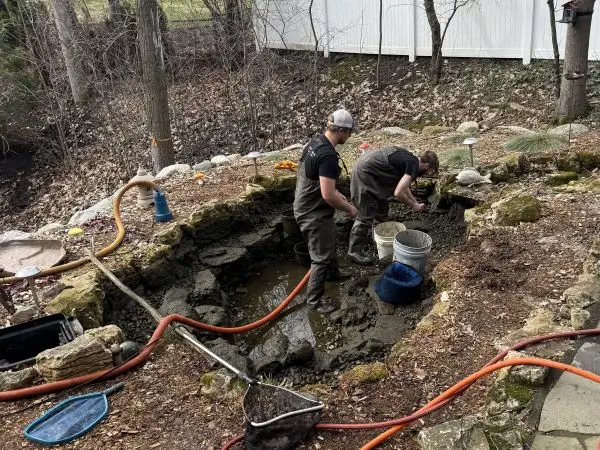
Certain common maintenance practices can unintentionally disrupt biological balance. Overcleaning filters, power washing rocks, and fully draining the pond can remove beneficial bacteria and bring the nitrogen cycle to a halt. Remember to always add extra beneficial bacteria to a pond after a thorough cleaning.
Overfeeding fish is the most common issue as excess food quickly breaks down into ammonia, quickly overwhelming bacteria. Be sure to feed your fish only what they can finish in three minutes, or before it sinks or gets sucked in by the skimmer. Adding fish too quickly or overstocking beyond the pond’s capacity also puts extra strain on the system. Remember for small fish that for every inch you need 10 gallons of water, so a 10 inch fish would require at the minimum 100 gallons of water. For adult koi we recommend at least 250 gallons of water per fish. Consistency and restraint are key to maintaining a healthy ecosystem.
Ecosystem Ponds Support Natural Balance
Ecosystem ponds are designed to work with nature rather than against it. These ponds incorporate biological filtration, plants, proper circulation, and natural materials to support the nitrogen cycle.
Instead of relying on harsh chemicals or frequent cleanings, ecosystem ponds allow beneficial bacteria to do the heavy lifting. Water flows continuously through biological filters and over porous stone surfaces, creating perfect conditions for beneficial bacteria to process waste. This biological approach results in clearer water, healthier fish, and lower maintenance demands.
How Professionals Design for the Long Term
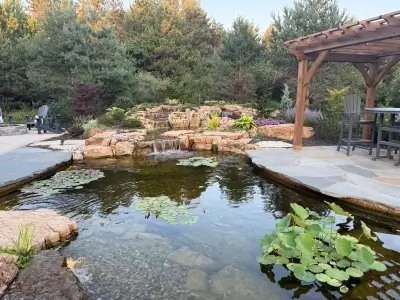
Professional pond builders design systems that will support the nitrogen cycle right from the start. Proper depth, adequate filtration, efficient circulation, and plant placement all contribute to biological stability. Future growth of fish, plants, and surrounding landscapes are also top priorities when designing a healthy pond. By building ponds as complete ecosystems rather than decorative features, they create water features that remain clear, healthy, and enjoyable for years.
The Secret to a Thriving Pond
The nitrogen cycle is the foundation of every healthy pond. When beneficial bacteria are supported and biological filtration is allowed to happen naturally, ponds become far more resilient and much easier to maintain. Instead of reacting to problems as they occur, a balanced pond uses the nitrogen cycle to process waste and maintain clarity, all in the background.
Clear healthy water isn’t about constant intervention, it’s about nature. By understanding and supporting the nitrogen cycle, pond owners can make smarter decisions, avoid common mistakes, and enjoy a pond that thrives through every season.
Our team specializes in designing and upgrading ponds that work with nature, not against it. Whether you’re planning a new installation or considering improvements to an existing pond, we can help create a balanced pond that supports the nitrogen cycle and the ecosystem around it. Contact us today to start designing a pond built for clarity, balance, and lasting beauty.
About The Author

Jim Andrie is the Operations Manager at Platinum Ponds & Landscaping and has spent the past 10 years designing and building high-quality outdoor spaces across West Michigan. As a Certified Aquascape Contractor and a 2024 Water Artisan of the Year, Jim specializes in ecosystem ponds, natural water features, and custom hardscaping that blends beauty with long-term functionality.
Born and raised in West Michigan, Jim understands the unique challenges of the local climate and designs landscapes built to thrive through every season. An Eagle Scout with a lifelong connection to the outdoors, he is passionate about creating spaces that help families enjoy nature right in their own backyard.