
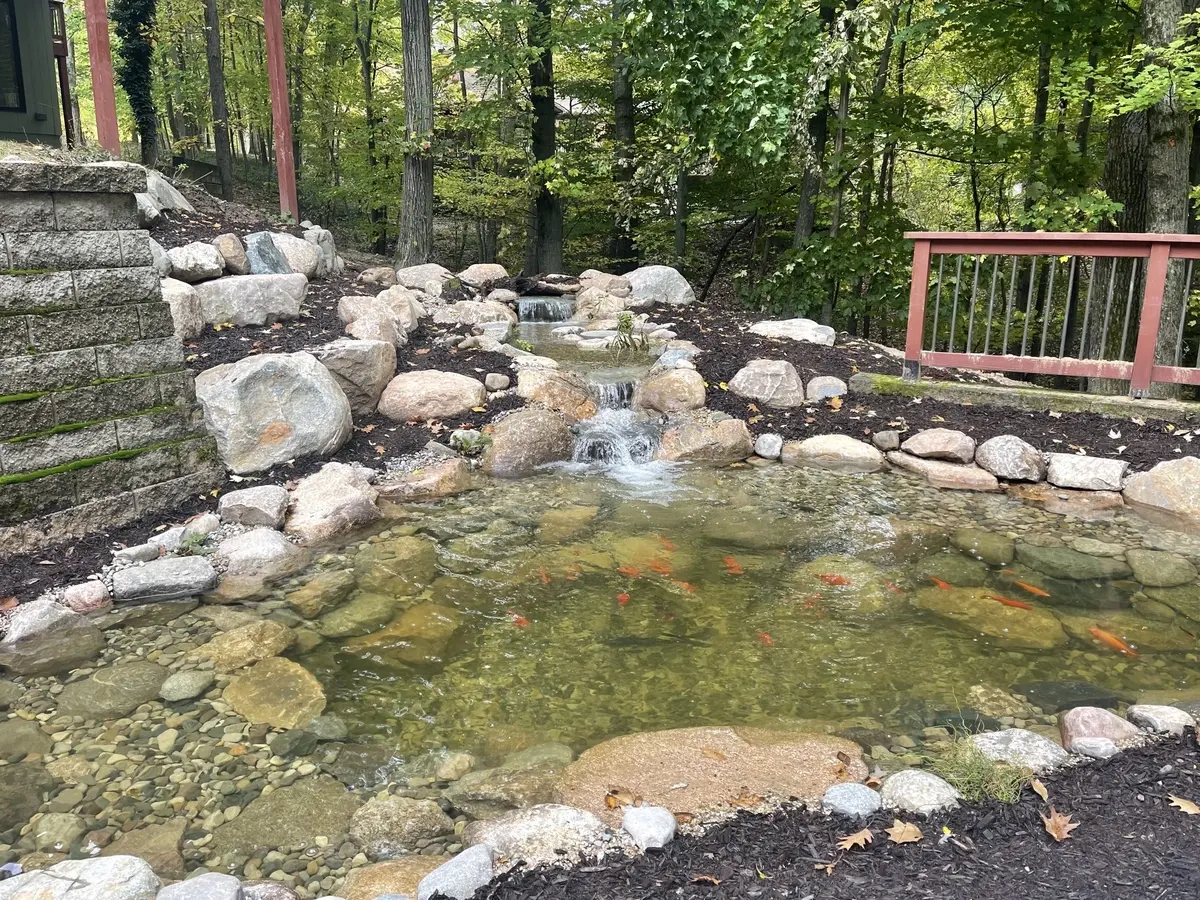
As winter fades and temperatures rise, pond owners look forward to turning their pumps back on and bringing their water features back to life. A proper spring pond opening is one of the most important steps you can take to ensure clean water, healthy fish, and minimal maintenance throughout the season. Spring startup shouldn’t be rushed—it’s about timing, observation, and gently supporting your pond as it wakes up from winter dormancy.
Following a thoughtful spring maintenance plan helps prevent algae issues, equipment damage, and unnecessary stress on your fish, your ecosystem, and yourself. This guide walks you through the essential steps for a successful spring pond startup.
Why Proper Spring Pond Opening Matters
Opening your pond in spring is all about timing, and water temperature plays a critical role. In general, maintenance should not begin until water temperatures are consistently near 50°F. At this point, beneficial bacteria begin to wake up, aquatic plants start emerging from dormancy, and fish slowly become more active. Starting maintenance at the right time allows you to clean and restart your pond without shocking fish or plants or creating unnecessary imbalances in the ecosystem.

Step-by-Step Guide for Spring Start Up
Visual Inspection After Winter
Before beginning any maintenance, start with a careful visual inspection. Look for signs of winter damage such as shifted rocks, cracked fittings, or sagging liner caused by freeze-thaw cycles.Observe your fish closely as well. Healthy fish should be alert and moving calmly. Mild lethargy is normal in early spring, but gasping at the surface, visible sores, or erratic swimming may indicate stress or health issues that should be addressed promptly.
Removing Debris
The next step of a spring pond opening is to remove excess organic material from your pond. Leaves, twigs, and thick sludge will have built up over winter, and if left in the pond may lead to algae blooms. Use a net and bucket to remove any organic material that doesn’t belong in your pond. This is also a perfect time to trim back your aquatic plants.
Spring Plant Care
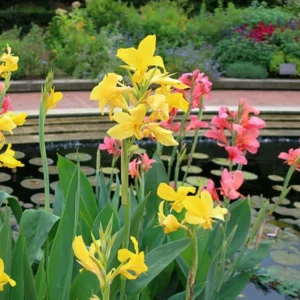
Spring is the ideal time to trim back aquatic plants. Remove dead foliage and cut back perennials to encourage new growth. Hardy plants can be divided or transplanted but you should wait for warmer water to reintroduce tropical plants back to the pond. Proper plant care improves water quality by competing with algae for nutrients and providing shade once the heat of summer arrives.
Draining and Cleaning the Pond (Optional)
Although not always necessary, fully draining and powerwashing a pond can provide meaningful benefits. Draining the pond allows you to access hard to reach areas and remove much more sludge and debris that you can’t get with a net. Powerwashing can restore the appearance of rocks and waterfalls, improve water flow, and eliminate trapped organic matter underneath rocks and gravel.
If you choose to drain your pond make sure to keep your fish safe by storing them in a bin with old pond water and ensure they have a supply of oxygen. Once the pond is cleaned and refilled, slowly reintroduce the fish to the pond by lowering the whole bin into the water and allowing the fish to swim out at their own pace. This helps prevent temperature and water-parameter shock.
Restarting Equipment
Once the pond is filled to its normal operating level make sure your filter pads and skimmer basket are clean and in place. Make sure any valves are opened before starting the pump. After starting the pump, keep an eye on the water level. Sometimes the stream will take enough water to fill that the water in the pond drops below the skimmer level. Nothing to worry about if this happens, simply unplug the pump and refill the pond before trying again.
Rebalancing Beneficial Bacteria

Winter slows your pond’s nitrogen cycle but beneficial bacteria doesn’t completely disappear. As water warms, bacteria naturally rebuilds. Adding additional beneficial bacteria will jumpstart the process, but timing is key.
Only add bacteria once the water temperature is consistently 50°F. Adding bacteria too early is ineffective and will lead to excess waste. Used correctly, beneficial bacteria support clear water, reduce organic waste, and minimize algae growth through the season.
Managing Early Season Algae
Seeing algae blooms in spring is completely normal. Increased sunlight and warming water create ideal conditions for algae growth before beneficial plants and bacteria are fully established. Another major contributor to early-season algae is overfeeding fish. Fish shouldn’t be fed until the water temperature is above 50 degrees. When you do start feeding, only feed what they can consume quickly—before it sinks or gets pulled into the skimmer. Uneaten food breaks down into excess nutrients that plants can’t yet absorb, giving algae the perfect opportunity to thrive.
Managing a pond ecosystem is all about balance. When plants haven’t fully matured, algae naturally steps in to absorb excess nutrients. While those nutrients can be harmful to fish, algae plays an important early-season role by keeping the water safer and more stable. As aquatic plants begin to grow and establish themselves, they take over this job—at which point it’s safe to gradually start removing algae.
In early spring, algae should be removed by hand rather than treated with harsh chemicals. Aggressive algaecides can disrupt the pond’s natural balance and often lead to water quality issues later in the season.
When to Call a Professional
Some situations are best handled by a professional. Significant water loss, equipment failure, excessive organic matter, or persistent water quality problems are all signs that expert help may be needed.
A professional spring pond opening typically includes a thorough cleanout, equipment inspection, proper startup of pumps, and guidance on seasonal maintenance. Investing in professional spring pond service early can prevent ongoing issues and ensure an enjoyable pond season.
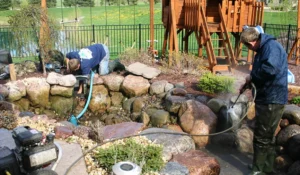
Set Your Pond Up for Success
A successful spring pond opening sets the tone for the entire year. By following this outline you can enjoy clean clear water and a low maintenance pond all season long. With the right approach, and professional support when needed, your pond will move smoothly from winter dormancy into spring. Contact us today for professional assistance with your spring pond opening!
Related Article: 6 Things To Do While Cleaning Your Pond
About The Author

Jim Andrie is the Operations Manager at Platinum Ponds & Landscaping and has spent the past 10 years designing and building high-quality outdoor spaces across West Michigan. As a Certified Aquascape Contractor and a 2024 Water Artisan of the Year, Jim specializes in ecosystem ponds, natural water features, and custom hardscaping that blends beauty with long-term functionality.
Born and raised in West Michigan, Jim understands the unique challenges of the local climate and designs landscapes built to thrive through every season. An Eagle Scout with a lifelong connection to the outdoors, he is passionate about creating spaces that help families enjoy nature right in their own backyard.