
Few things cause pond owners more stress than watching their water level slowly drop. One day everything looks perfectly normal, and the next you’re wondering if your pond might have a problem. The good news? In many cases pond water loss is completely normal, especially during the heat of summer.
Understanding the difference between natural evaporation and a true leak is essential for protecting your pond, your fish, and your peace of mind. By knowing what to look for and how to respond, you can address water loss confidently and avoid unnecessary repairs.
Normal Water Loss
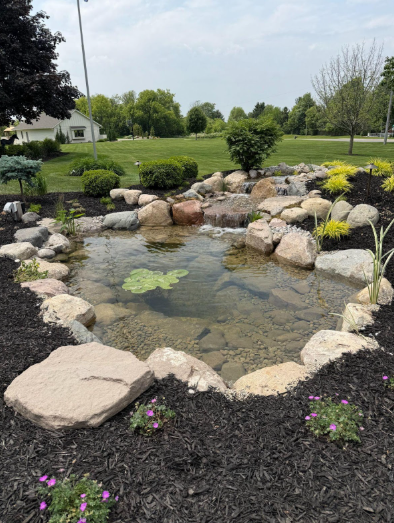
All ponds lose water naturally. Ponds are open ecosystems exposed to sun, wind, and lots of moving water. Water loss becomes even more noticeable during warmer months, when higher temperatures and longer daylight hours increase evaporation.
Waterfalls and streams are also major contributors to normal water loss. As water moves and splashes, tiny droplets evaporate more quickly than still water. In some cases, water may splash outside the liner when it hits rocks or during windy conditions.
Other, more surprising, normal sources of water loss are plants taking up water, as well as capillary action (aka wicking) from rocks, gravel, soil, moss, or plant roots that touch both the inside and outside of the water.
In a healthy pond, a small, gradual drop in water level is often completely normal.
Summer Evaporation
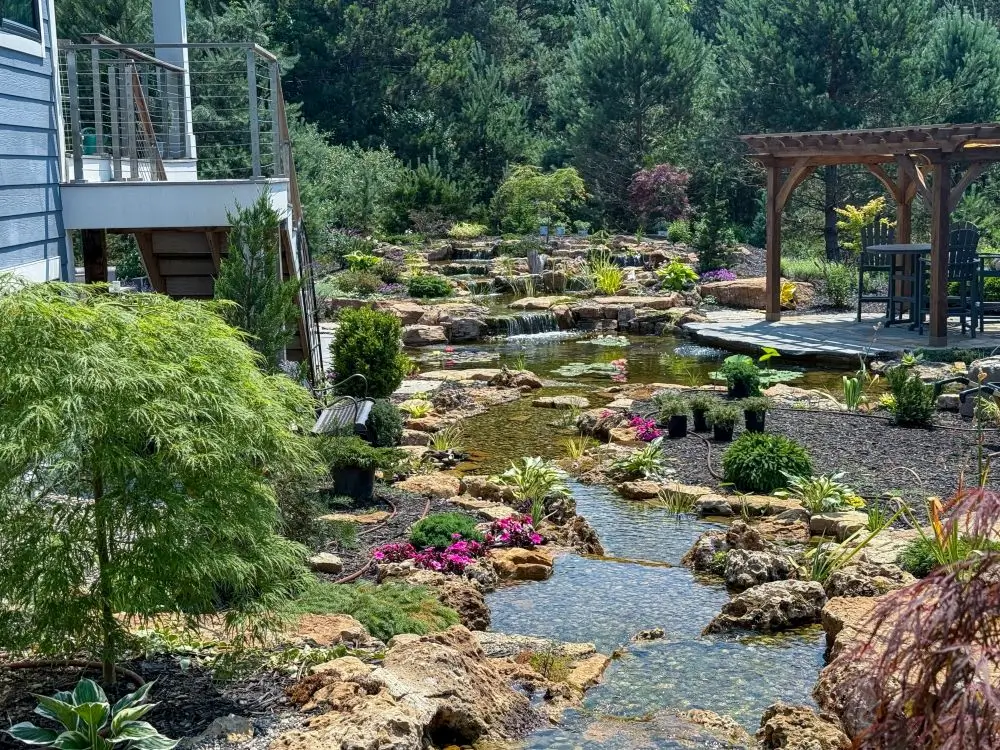
Summer is the most common time for pond owners to notice water level changes. High temperatures, direct sunlight, low humidity, and high wind all accelerate pond evaporation. Ponds with strong waterfalls, long streams, and larger surface area will lose water more quickly than smaller features.
It is also important to remember that evaporation rates will fluctuate. A hot windy week can cause noticeable faster water loss than a cooler, calm one.
The general rule of thumb for healthy water loss is 1% of the gallons pumped per hour in a day. As an example, let’s use a pond that is pumping 5000 gallons per hour. If we multiply 5000 by 1% (or 0.01) we get 50. This tells us that under normal circumstances a pond pumping 5000 gallons per hour should expect to lose around 50 gallons of water per day.
Signs of a Leak
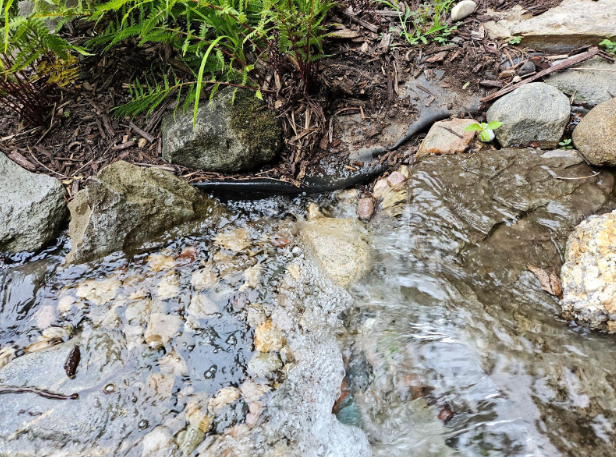
While evaporation is normal, certain red flags may indicate a leak. Look out for:
- Rapid water loss (several inches per day)
- Water loss that drops to a specific level and then stops
- Loss continuing during cooler, overcast weather when evaporation is minimal
- Soggy areas around the pond or water collecting where it shouldn’t
- Exposed liner or rocks that were previously submerged
These signs often point to a leaking liner, low edge, or plumbing issue that may require attention.
How to Test for Leaks
A simple test can help determine where a leak might be occurring:
- Turn off waterfalls, streams, and other water features.
- Allow the pond to sit still for 24 hours while monitoring the water level.
- Use an aerator or air stone to keep your fish safe during this time.
-
- If water loss slows significantly or stops, the leak is likely in the stream, waterfall, or plumbing.
- If water continues to drop quickly, the leak is probably somewhere in the pond basin itself.
Observing where the water level stabilizes can help indicate the height of the leak.
Keep in mind that evaporation also decreases when water movement stops, so this test is most useful when you’re confident that water loss is greater than normal evaporation.
Common Leak Locations
Many pond leaks occur in predictable areas:
- Waterfall drops and pond or stream edges – especially in older ponds, where liner may have settled, soil has shifted, or plants have grown over the edges
- Rock movement – stones can shift over time, creating gaps or pathways for water to escape
- Streams and waterfalls – water may run over the liner instead of flowing back into the pond, causing ongoing water loss
When DIY Fixes Can Work
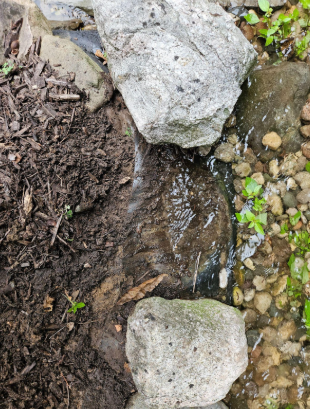
Minor issues can often be resolved without professional help. Repositioning rocks, trimming back plants, or adjusting waterfall flow can eliminate splash out. Wet spots around the pond and waterfall can normally be addressed by lightly pulling up the liner on the edge of the water feature in the affected spot. Check for plants, moss, soil, or mulch that may be touching both the inside and outside of the liner, and move them to prevent wicking.
Pro Tip:
Use expanding pond foam to direct water away from unwanted areas
Keep in mind that older liners can become more fragile over time, so exercise caution when making adjustments. Avoid dropping heavy rocks onto the liner, and never place sharp or jagged edges directly against it. If water loss continues despite these minor fixes, a more thorough investigation may be needed.
When to Seek Professional Help
Persistent or significant water loss often calls for a professional evaluation. Locating a leak can vary in difficulty, especially if there are no obvious wet spots around the pond. Documenting the steps and observations from your leak test can be incredibly helpful—your insights give the professional valuable information to determine the most effective next steps.
Pond specialists use their experience and targeted testing to pinpoint issues without causing unnecessary disruption to your pond. Many leaks can be resolved with small fixes, such as patching liner holes, readjusting stonework, or refitting plumbing.
Even if the water loss is due to evaporation rather than a leak, a professional can offer solutions, such as installing an automatic fill valve. This helps maintain a consistent water level, reducing stress on your pond and simplifying routine maintenance. With the right support, your pond can stay healthy, beautiful, and worry-free.
Water level changes can be concerning but they don’t always signal disaster. Understanding the difference between evaporation and leaks empowers you to respond appropriately and avoid unnecessary stress.
If your pond’s water level keeps dropping or you’re unsure what’s normal, expert help can provide clarity and peace of mind. Addressing pond water loss early is important to keep your water feature healthy, balanced and enjoyable all season long.
About The Author

Jim Andrie is the Operations Manager at Platinum Ponds & Landscaping and has spent the past 10 years designing and building high-quality outdoor spaces across West Michigan. As a Certified Aquascape Contractor and a 2024 Water Artisan of the Year, Jim specializes in ecosystem ponds, natural water features, and custom hardscaping that blends beauty with long-term functionality.
Born and raised in West Michigan, Jim understands the unique challenges of the local climate and designs landscapes built to thrive through every season. An Eagle Scout with a lifelong connection to the outdoors, he is passionate about creating spaces that help families enjoy nature right in their own backyard.