

Power outages are never ideal, but with a little awareness, you can help protect your pond and the life it supports. Ponds and water features depend on electricity to keep water moving, filtered, and oxygenated for fish and plants. When the power goes out, these systems pause, and your pond may need a bit of extra attention. By understanding what’s happening in your pond during an outage, you can take simple, proactive steps that make a big difference in keeping your fish healthy and safe.
Why is Power Important to Pond Health?
The pump plays a vital role in keeping your pond thriving—much like a heart supports the body. It keeps water moving through filters that remove debris and waste. Surface agitation from waterfalls and aerators help maintain healthy oxygen levels. In winter, your deicer keeps a hole in the ice to allow for gas exchange. Together, these elements create a balanced ecosystem for fish and plants. When power is interrupted, circulation pauses, and you may need to step in and support your pond until everything is running again. With the right knowledge and a few proactive measures, you can help ensure your pond stays healthy and your fish remain safe.

How Long Can Fish Survive During a Pond Power Outage?
Every pond is unique, and how fish respond to a power outage depends on a few key factors—pond size, fish load, water temperature, and existing oxygen levels. Well-designed and appropriately stocked ponds are surprisingly resilient, especially when these elements are properly balanced from the start. In cooler weather, fish can often tolerate longer periods without power, while warmer summer temperatures simply mean the pond may need a little extra support.

Summer Power Outages
Warm water naturally holds less oxygen, and fish are more active, which means oxygen demand is higher. If power is interrupted, you may need to act quickly to ensure oxygen levels do not drop too low. Luckily the solution is simple – Agitating the water surface helps to facilitate gas exchange and increase oxygen levels in the water.
Winter Power Outages
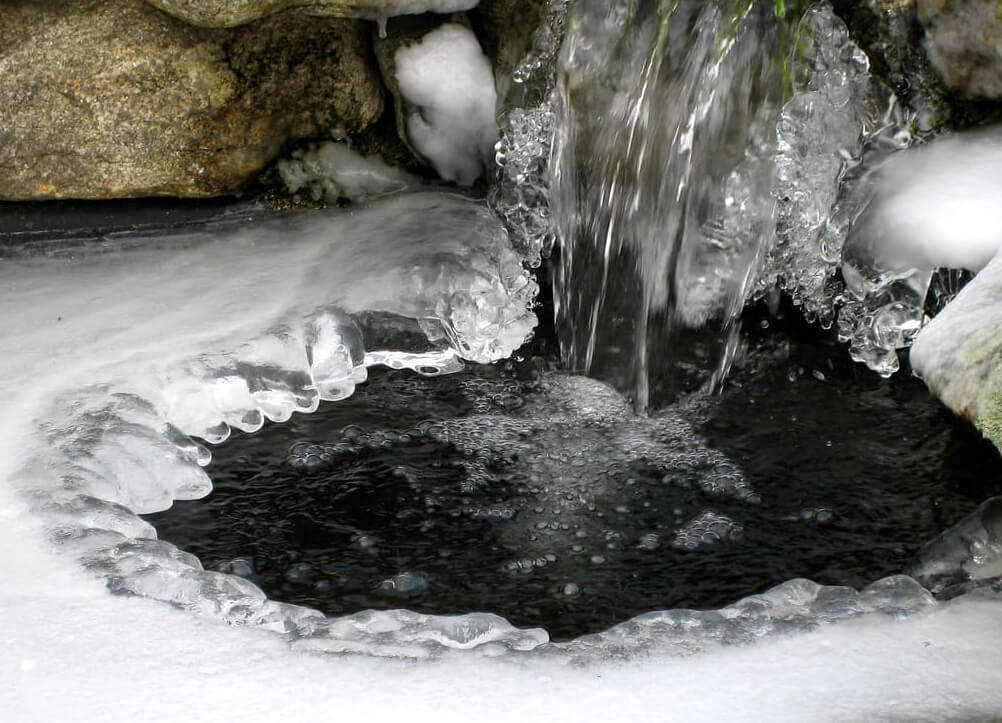
Winter ponds are remarkably stable, even during power outages, since cold water holds onto oxygen more readily than warm water. However, if aerators or de-icers stop working in below-freezing weather, keep an eye out for ice forming across the surface of the pond. When a pond freezes over completely, toxic gases from decaying organic matter are trapped in the water beneath the ice. Without enough gas exchange, fish may suffer even if the water temperature remains stable. The main goal in winter is maintaining a small opening in the ice to allow for healthy gas exchange.
A Well-Maintained Pond is Resilient
Ongoing success comes from a few straightforward habits:
- Keep your pond clean by removing excess debris and maintaining filtration systems on a regular basis.
- Stock fish responsibly to match pond size
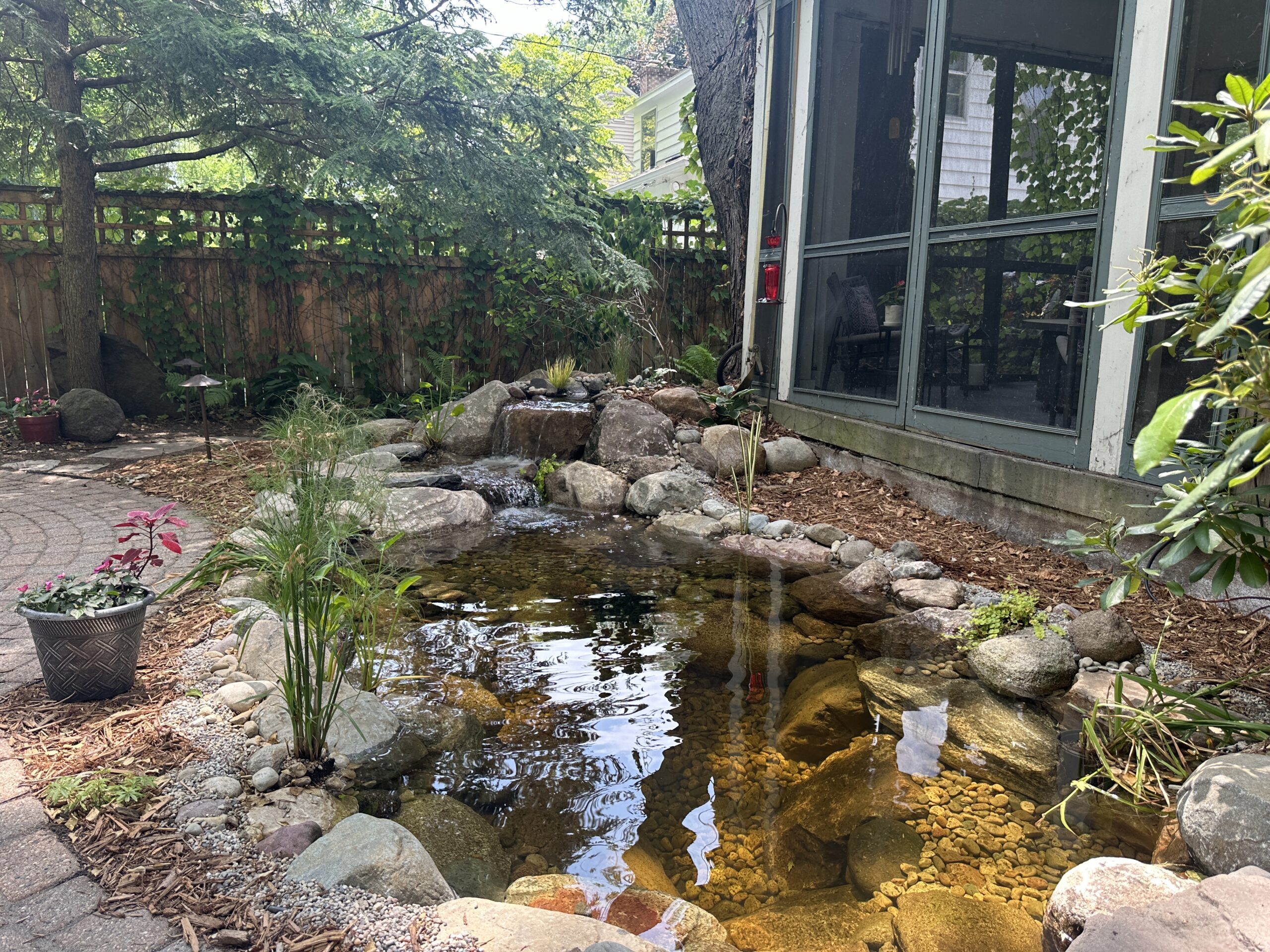
These proactive steps help ensure your pond has enough of a buffer to be unphased by short power outages.
What to Do During a Power Outage
If an outage occurs, checking on your pond is a simple and reassuring first step:
- Observe your fish—calm behavior usually means conditions are stable. Gasping at the surface of the water indicates low oxygen levels.
Ensure aeration –
- Run a hose to the pond and create splashing on the surface.
- In winter – maintain an opening in the ice using warm water rather than breaking it forcefully
Minimize bioload –
- Pause feeding until systems are fully restored
- Remove any excess debris from the pond
These small actions can make a big difference!

The Big Picture
Power outages are a normal part of life, but they don’t have to be stressful. Luckily, a well-maintained, appropriately-stocked pond is resilient and can weather several hours without power. With thoughtful design, proper maintenance, and a few simple backup solutions, ponds remain safe, resilient, and enjoyable year-round.